


Why QuakeCon remains a gibtasticly good time after almost 30 years
Tim Willits was attending his 21st QuakeCon when he claimed to have invented the concept of multiplayer maps. “That was my idea,” the id veteran told me. “I had finished all my work on the shareware episode of Quake and because we had no design direction, we had all these fragments of maps. I came into the office one day and talked to John Romero and John Carmack. I said, ‘I can take these and turn them into maps you only play in multiplayer.’ They both said that was the stupidest idea they’d ever heard.”
Over the course of the week following our conversation, id luminaries Romero, Carmack, Tom Hall, and American McGee all spoke up to refute Willits’s claim. It was a reunion of sorts, in a form befitting the history of ‘90s id Software: a disagreement.
QuakeCon has long blended the warmth of a community get-together with the star power of a rock festival. It’s a mix that has its roots in the #quake IRC channel of the late ‘90s, where id designers like Romero and Christian Antkow would drop in unannounced to chat with fans.
As players grew frustrated with the limited bandwidth of dial-up multiplayer, enthusiasm grew for the idea of a grand LAN party, where friends could put faces to the monikers they’d come to know online, and then fire rockets straight into them. Members found a hotel close enough to id’s headquarters in Mesquite, Texas for Quake’s developers to join in if they wanted. Which they did—decorating the parking lot of the La Quinta Inn with their Ferraris before heading to the conference room, where approximately 40 fans competed over a strained network for bragging rights. Back then, Quake was new, and id’s developers saw new in-game strategies appear before their eyes.
“Everybody knew everybody,” Romero told Retro Gamer in 2021. “Everybody knew everybody’s nicknames. It was like a release party that we were having a LAN party at.” The following year, QuakeCon attracted 12 times the number of attendees, and enough of them brought their own computers to blow the power at a Holiday Inn in Plano. id Software brought in technicians to help keep the gibs flying.
Over time, as attendance grew, so did the tournament prize money. Official support from id Software stepped up with corporate sponsorship, exhibitor booths, and developer presentations. Yet as QuakeCon started to resemble other big conventions and trade shows, the homegrown fire at its centre continued to burn—with the temperature kept in check by zany and inventive water coolers. Many attendees still bring their own PCs, and numerous strange and deeply ‘90s traditions cling to QuakeCon even now, like the dirtiest keyboard competition, and the makeshift monuments built from cans of Bawls energy drink consumed during the show.
The connection to Quake’s creators has persisted, too, even as id Software’s founders have gradually moved on. It was at QuakeCon in 2014 that John Romero reconnected with Doom’s original artist, Adrian Carmack. “We shut the restaurant down,” Romero recalls in his autobiography. “And continued talking in the parking lot until nearly 4 a.m.” Their extended chats about shooter design inspired Romero to return to the FPS genre after a 15 year break, and to start building Doom levels again. That spark ultimately gave us Sigil and its sequel, two deliciously devious mod mission packs you can play in the newly enhanced editions of Doom.
By the time I made it to QuakeCon in 2017, I was one of 9,000 visiting the Gaylord Texan—an indoor hotel and convention center so sprawling that, with its steakhouse and nightclub and cowboy hat outlet, it felt a little like a Duke Nukem 3D level built out endlessly by an enthusiastic modder.
At that time, id Software was riding high on the success of its Doom reboot, and studio owner Bethesda had flown in a who’s who of ‘90s action game luminaries from its wider stable of developers. Shinji Mikami sat at the head of a table where journalists hung onto his every translated word. Deus Ex legend Harvey Smith called me out for not having yet played Dishonored 2, then said he was joking as I stammered out an explanation.
That weekend, Floyd Mayweather pummelled Conor McGregor on live television. The Gaylord Texan’s sports bar chose another channel, for fear of upsetting its younger guests. But over in the tournament hall, a 17-year-old bequiffed Belarusian named Clawz wiped the floor with a ‘90s Quake veteran known as Vo0, becoming $175,000 richer in the process. What would he do with his earnings? “I have no clue, man,” he told me. “Literally no clue. It’s way too much for me.”
The most beautiful echo of QuakeCon’s earliest days, however, came when the convention center's internet connection collapsed, caving under the weight of too much PC gaming. In the show hall filled with machines attendees had brought from home, a player projected his desktop background onto the wall: "REMEMBER WHEN WE COULD PLAY GAMES AND THE INTERNET WORKED?"
As players sat shoulder-to-shoulder, booting up the ‘90s-riffing management game Factorio over LAN, there was no word on when the internet would be back. Yet the connection, the one that QuakeCon had first fostered between fans two decades earlier, was stronger than ever.
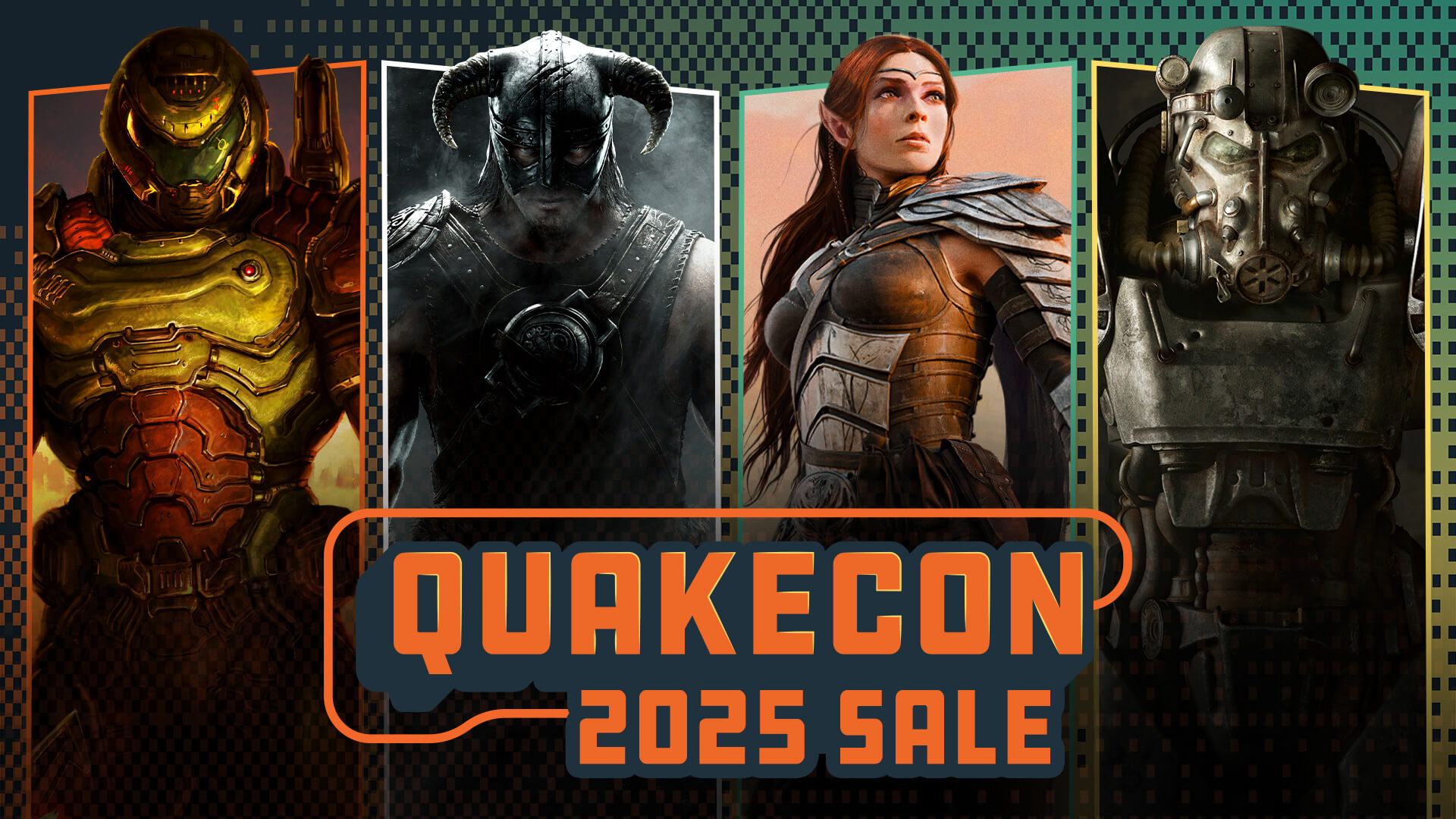
Quakecon 2025 runs from August 7 through August 10. You should especially check out the charity events for Dallas Pets Alive, where you can watch a livestream and gain an in-game pup for Elder Scrolls Online!

Reply
To leave a comments, please login or register.